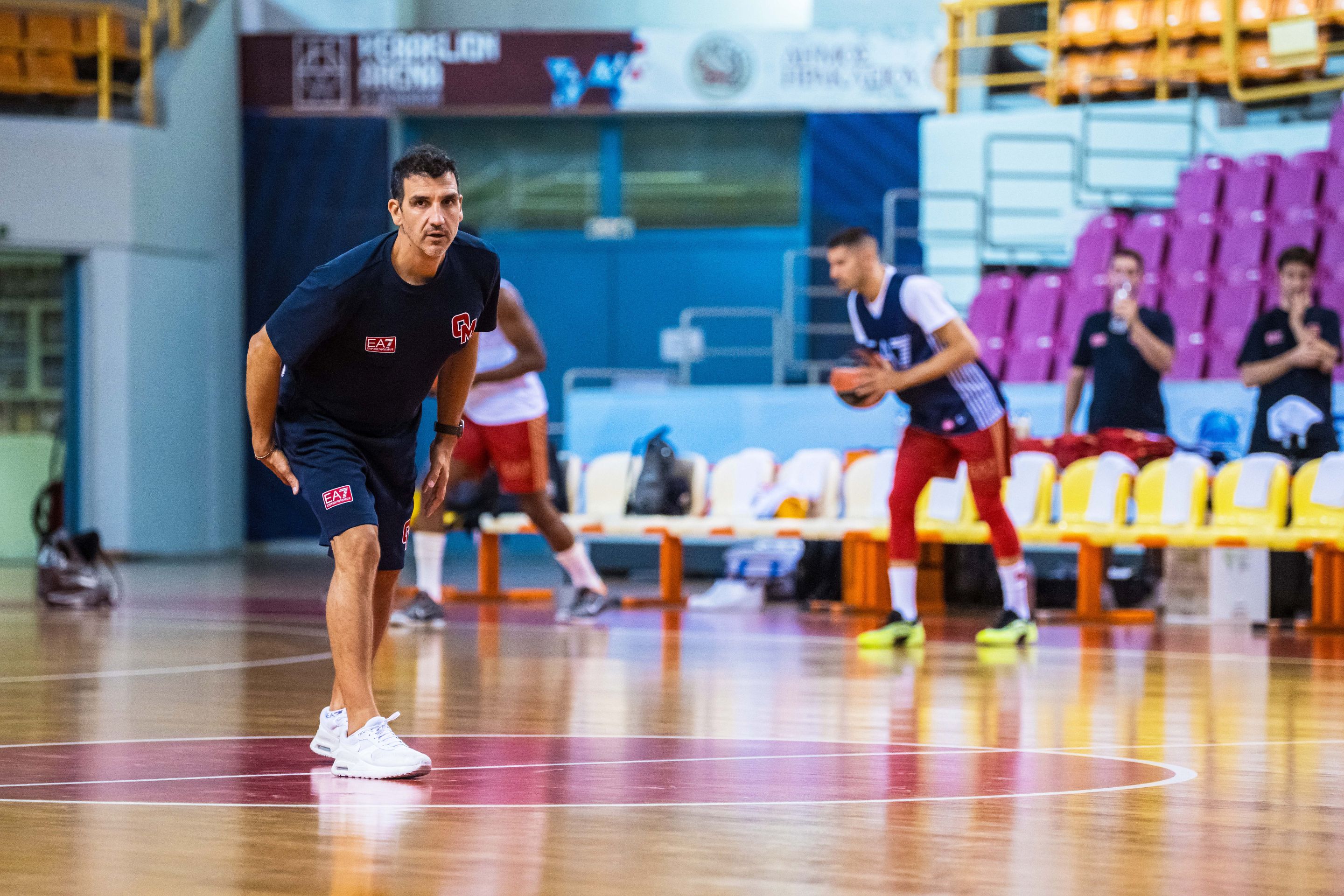
Data, People and Culture: the approach to performance of Kostas Chatzichristos, Head of Performance at Olimpia Milano
In elite basketball, performance is never the result of a single factor.
It comes from the combination of science, experience, communication, and the ability to adapt to constantly changing environments. Technology and data play an increasingly important role, but according to Kostas Chatzichristos, Head of Performance at Olimpia Milano, the most valuable information still comes from understanding the person behind the athlete.
Having worked across the United States, Greece, Russia, Turkey, and Italy, Chatzichristos has developed a performance philosophy built on continuous learning, cultural awareness, and constant evolution.
We spoke with him about training, recovery, injury risk management, and the future of athlete performance.
Method and philosophy: a continuous learning process
1. You’ve worked in the United States, Greece, Russia, Turkey, and now Italy. Alongside your club roles, you’ve also been involved with the Greek National Team and co-founded both Performance22Lab and ESCCA. How have these experiences shaped your philosophy and methodology?
For me, philosophy and methodology are never fixed concepts. They evolve continuously as I learn, gather new experiences, and challenge my own assumptions. Every season, every team, and every athlete teaches you something new.
What we do in performance is essentially an ongoing process of trial and error. We try to understand what works, what doesn’t, and most importantly, why something works.
The challenge today is that information is everywhere. Especially over the last decade, access to knowledge has exploded. The difficult part is not finding information: it’s organizing it into a coherent methodology that can actually be applied in practice.
That constant process of learning, testing, and adapting is what shapes my approach to training and performance.
2. How important is cultural adaptation when working in different countries and environments?
Culture affects everything: it affects communication, relationships, hierarchy, decision-making, and even how people react to mistakes.
In Russia, for example, I found people generally more reserved and less accustomed to open discussion. In the United States, communication was much more direct and informal.
Turkey felt closer to Greece in many ways: people are emotional, passionate, and highly expressive.
Italy has been a very professional environment, with many similarities to the broader Mediterranean culture.
Every country has its own unwritten code. Understanding that code is crucial if you want to communicate effectively and help people perform at their best.
And today, even within one team, you’re often dealing with multiple cultures and personalities simultaneously. Creating a shared team culture becomes both a challenge and an opportunity.
Performance starts with understanding the athlete
3. When you walk into the training facility in the morning, what’s the first thing you focus on?
There are two parts to that answer.
The first is data: we systematically collect information about sleep quality, hours slept, perceived fatigue, and any physical discomfort the players may be experiencing. We also review data collected from wearables and other monitoring systems.
The second part is direct interaction: talking to players, observing them, asking how they feel, and understanding whether a pain is something new or something expected gives us information that no dashboard can provide.
Data helps us identify patterns, but conversations help us understand context.
4. How do you use that information to guide the day’s work?
The goal is always to adjust the plan to the athlete’s current condition.
If someone shows signs of excessive fatigue or discomfort, we may modify the training load, adapt the session, or schedule specific interventions.
Our job is to keep players available, healthy, and ready to perform. Everything starts with understanding where they are on that particular day.
Injury prevention or Risk reduction?
5. In modern basketball, many experts are moving away from the concept of injury prevention and instead speak of injury risk reduction. What is your perspective?
Injuries are part of sport. Especially in today’s basketball, where schedules are extremely demanding, and the intensity of the game continues to increase. No one can honestly claim that injuries can be fully prevented.
What we can do is reduce the probability that they occur. To do that, we first need to understand the athlete and the environment they operate in.
Previous injury history is extremely important, not only because of the physical consequences of an injury, but also because injuries often change movement patterns, loading strategies, and training responses.
6. What does effective risk reduction look like in practice?
The goal is to find the sweet spot. Athletes need to train hard enough to improve and stay competitive, but not so hard that the risk becomes unnecessarily high.
That balance requires collaboration between coaches, performance staff, medical staff, and organizations.
Basketball today is very different from the game played in the 1980s and 1990s. The sport has evolved, and our strategies must evolve with it.
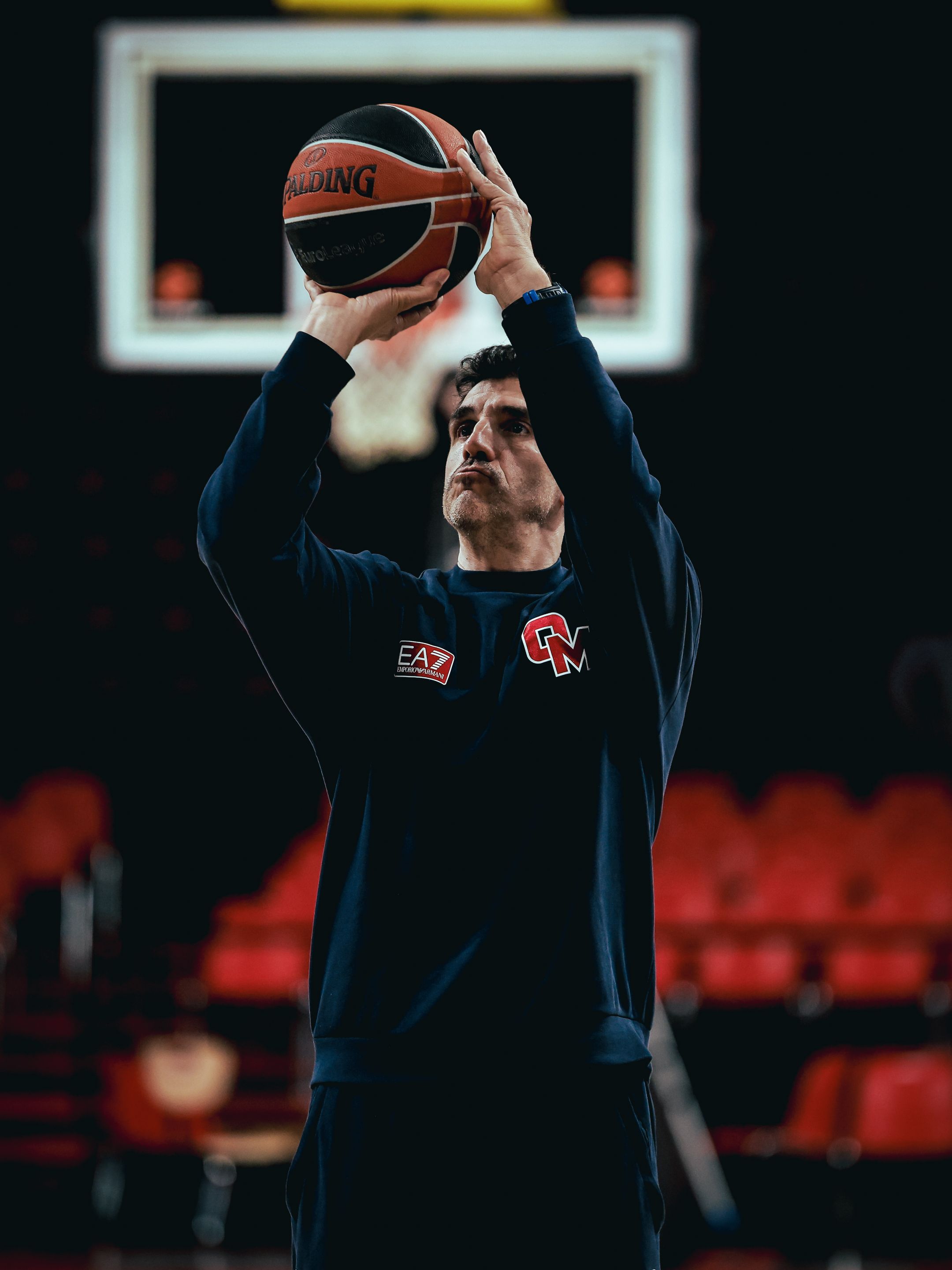
Recovery: a continuous process, not a single intervention
7. After demanding games or training sessions, what recovery strategies do you prioritize?
Recovery begins with the fundamentals: good sleep, proper hydration, adequate refuelling, and avoiding alcohol, which can significantly disrupt sleep quality.
Those principles apply to everyone. From there, we individualize the process according to the athlete’s needs.
8. What role do nutrition and supplementation play?
A very important one. We work closely with our nutritionist to ensure players receive the nutrients they need for recovery and performance.
Protein shakes, carbohydrates, hydration strategies, and specific supplements are all integrated into the process when appropriate and supported by science.
Every athlete has different needs, so recovery plans are always personalized.
9. How closely do you monitor recovery throughout the season?
Continuously. Recovery is not something that happens after a game. It’s an ongoing system.
We look at travel schedules, sleep quality, training loads, previous injuries, and the athlete’s overall perception of fatigue.
All these factors influence how quickly someone can recover and perform again.
The modern athlete: better informed, more challenged
10. How have athletes changed over the last 15 to 20 years?
The shift has been enormous: years ago, athletes could sometimes get away with poor recovery habits, lack of sleep, and unhealthy lifestyles while still performing at a high level.
That’s no longer possible. The demands of modern sport require athletes to take much better care of their bodies if they want to recover consistently and extend their careers.
11. How has access to information changed the athlete’s mindset?
Athletes today are far more informed. There is much more research available, especially around nutrition, recovery, and training. This has helped many athletes improve their habits and prolong their careers, but there’s also a downside: information overload.
Athletes are exposed to endless advice through social media, online experts, influencers, and content creators.
The problem is that not all information is good information.
Many athletes end up confused because they are trying to follow too many voices at the same time.
What we try to teach is consistency: find a reliable system, trust it, and avoid getting distracted by every new online trend.
Training the body or training the mind?
12. In your experience, which is harder to train: the body or the mind?
Definitely the mind. If the mind is in the right place, almost anything becomes possible, including recovering from a serious injury.
Mentality influences how athletes approach setbacks, adversity, and uncertainty. It’s easy to stay motivated when everything is going well.
The real challenge is maintaining discipline and belief when things are not going your way. That requires a very strong mindset.
Looking ahead: the role of Artificial Intelligence
13. Looking at the next generation of athletes, what innovation excites you the most?
Artificial intelligence. It’s already here, and I believe it will become increasingly important.
AI has the potential to make advanced tools and technologies more accessible, helping practitioners create more precise and individualized programs.
The opportunity to process and interpret large amounts of information could significantly improve decision-making.
However, technology should support human expertise, not replace it.
The athlete will always remain at the center of the process.
---
Data, technology, and science continue to transform elite sport. Yet, according to Kostas Chatzichristos, the foundation of performance remains surprisingly simple: understand the athlete, respect the individual, and never stop learning.
Because in modern basketball, the greatest competitive advantage isn’t having all the answers: it’s continuing to ask better questions.


